

Stoneman Syndrome or Fibrodysplasia ossificans progressiva (FOP) can be described as a rare genetic disease where tissues like tendons and ligaments form bones outside the skeleton system. The muscle tissue and connective tissue ossified (also known as extra-skeletal or heterotopic bone) which restricts the general movement of the bones and hampers an individual’s life.
The development of extra bones can be seen in early childhood itself starting from the neck and proceeding downwards in the body into the limbs. Patients who are born with FOP generally have big malformed toes.
This is a very distinct (1:2milion) symptom as none of the other skeleton and muscle-associated diseases does not showcase big malformed toes along with shorter thumbs and other skeletal abnormalities and growths.
Who does fibrodysplasia ossificans progressiva affect?
First, heterotopic bone in any region of the body can constrain the mobility of an individual. For instance, extra-skeletal in the neck region may cause difficulty in neck and mouth movement. It makes it difficult for the patient to speak, eat or rotate their neck freely.
Second, the growth of heterotopic bone does not stop on its own leading to more severe problems in the later section of life, the bone that once only affects the neck and mouth region will generally make its way downwards in the body from shoulders to backbone and further to limbs. This may put pressure on other bodily organs like the lungs and rib cage making it difficult for the patient to breathe.
Third, abnormal growth may make an individual’s overall body fragile and vulnerable to external damage. Any physical trauma to the muscles like a fall, an illness (like the flu) or invasive medical procedures can cause myositis (episodes of muscle swelling and inflammation) and increase the process of ossification in the affected area.
In females, the heterotopic bone in limbs or lower back can make it difficult to conceive, and continue with the pregnancy and childbirth, however, it is not impossible to conceive. But it is advised by medical professionals to avoid any pressure on your body to avoid any flare-ups.
Dr. Qaisar’s theory about fibrodysplasia ossificans progressiva 🦴
Bone growth depends on age, hormones, nutrition, genetics, and health conditions. Sometimes, bones grow unusually fast and/or abnormal due to some medical conditions for example: 
1- During puberty, growth hormones (GH), thyroid hormones, and sex hormones (testosterone, estrogen) surge. A leading cause of early onset of puberty, leading to early and rapid bone growth in broiler chicken and all processed foods including fact food.
2- Hormonal Imbalance: Excess Growth Hormone (GH) — e.g., Gigantism in children, Acromegaly in adults. Caused by overactive pituitary gland.
3- Nutritional Factors: High intake of calcium, vitamin D, protein, and zinc supports rapid bone formation.
4- Hyperthyroidism: Excessive thyroid hormone accelerates metabolism, including bone turnover. Certain bone disorders (e.g., Fibrous dysplasia, Osteoid osteoma) can cause localized overgrowth.
🧠 Key Point
Fast bone growth is normal during childhood/adolescence, but if it happens at an unusual age or rate, or if bones grow abnormally in shape, it could be due to hormonal or bone disorders and needs Homeopathic medical evaluation; in allopathy there is no treatment for fibrodysplasia ossificans progressiva (FOP).
Symptoms and Causes
What causes fibrodysplasia ossificans progressiva?
ACVR1gene is found in many tissues of the body including cartilage and skeletal muscle is responsible for the mapping of bone morphogenetic protein (BMP) type I receptors. BMP is a member of the protein family which looks after the infrastructure of the whole body by maintaining the right balance of morphogenesis, cellular lineage commitment, proliferation, differentiation, and apoptosis of various types of cells throughout the body.
ACVR1 gene also looks after the development of the muscles and bones including ossification. Usually, the process of ossification aids gradual replacement of cartilage by bone which is normal in the skeletal maturation of a healthy individual.
Mutations in the ACVR1 gene can cause disruption in mechanisms that control the activities of the receptors. The abnormal activation of receptors leads to more than the required ossification of bone morphogenetic protein leading to fibrodysplasia ossificans progressiva.
The good news is the cases of fibrodysplasia ossificans are very low, the probability of the case is 1 in 2 million people worldwide. This is because the illness of Stoneman Syndrome runs in autosomal dominant patterns, which means that one copy of the altered gene in each cell is enough to create the malfunction.
What are the symptoms of fibrodysplasia ossificans progressiva?
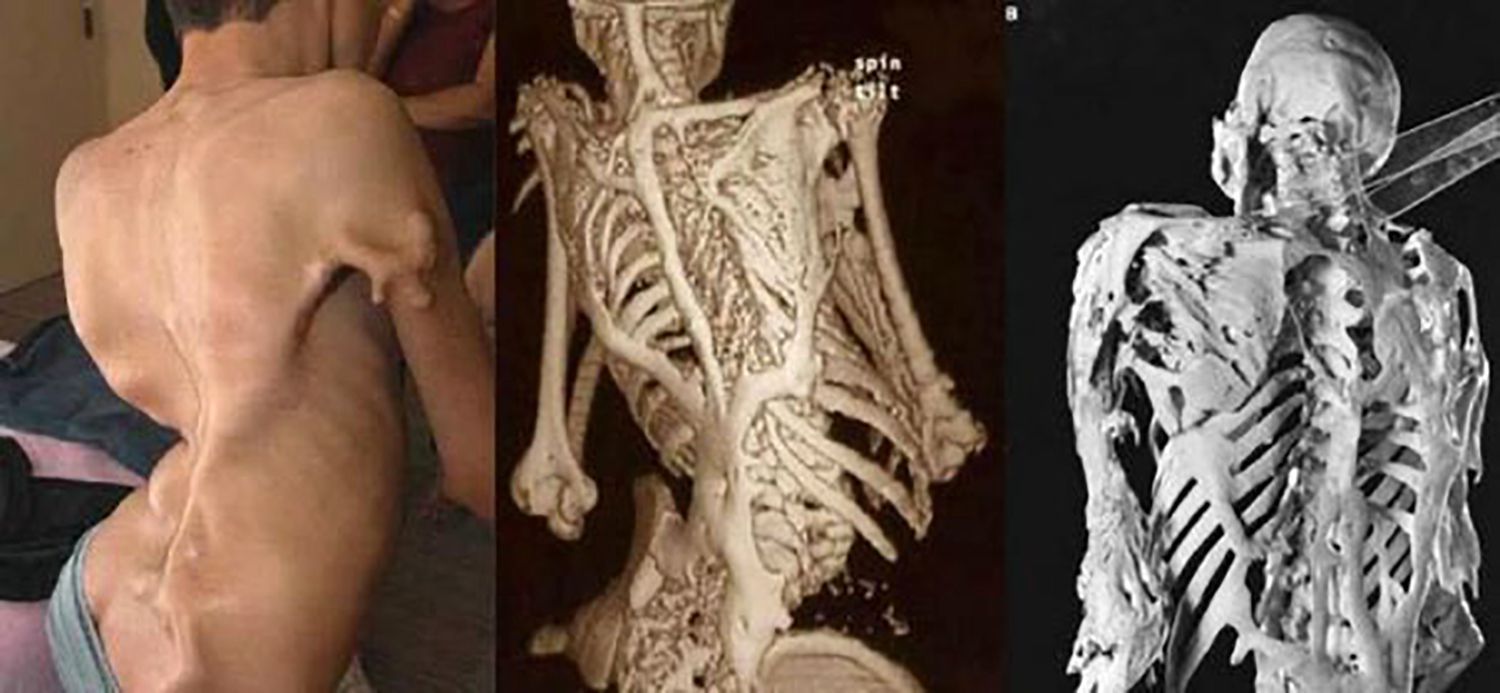
The main symptom of fibrodysplasia ossificans progressiva (FOP) is the gradual replacement of muscles, tendons and ligaments into bone (heterotopic ossification). This process begins at the neck and shoulders in early childhood and progresses throughout the body over time. The development of bone can be rapid in some cases, or very slow in others. Each case is unique. 
Symptoms arise during flare-ups, which are your body’s reaction to trauma that could be from an injury, surgery or viral illness like the flu. Swelling, or an increase in size or shape of a part of the body, can be painful. When flare-ups occur, the bone morphogenic protein type 1 receptors fail to stop producing proteins, which causes new bone to form on muscles, tendons and ligaments. After new bone forms, swelling decreases, which could take anywhere from a few days to a month.
A symptom of the condition that leads to an FOP diagnosis is a malformed and short big toe that sometimes grows inward and over the second toe. Growth differences of the big toes are visible at birth, even before other symptoms appear. Nearly 50% of cases of FOP also have malformations of the thumbs similar to the big toe.
Symptoms of fibrodysplasia ossificans progressiva include:
- Bone forming on muscles, ligaments and connective tissue.
- Decreased mobility (scooting instead of crawling, joint stiffness, locked joints).
- Difficulty eating or speaking.
- Hearing impairment.
- Malformed big toe.
- Permanent immobility.
- Red to purple, painful and hot to the touch areas of the body that look like tumors.
- Scoliosis or kyphosis.
- Swelling of soft tissue on the neck, shoulders and back.
As the condition progresses, people diagnosed with FOP may permanently lose the ability to move. They may experience pain and stiffness caused by bone growths that pinch nerves. At this point in a person’s diagnosis, they may be more susceptible to respiratory infection or heart failure.
In severe cases of FOP, people might experience challenges with their cognitive function and ability to learn.
Diagnosis and Tests
How is fibrodysplasia ossificans progressiva diagnosed?
Diagnosis of fibrodysplasia ossificans progressiva begins with a physical examination that identifies the symptoms of the condition, along with reviewing your medical history and performing a genetic test, which is a blood test to identify the gene mutation that causes symptoms. Imaging tests like an X-ray help your healthcare provider examine new bone growth over muscle and connective tissue.
Diagnosis of fibrodysplasia ossificans progressiva can be challenging for healthcare providers. It’s possible to misdiagnose symptoms of FOP as cancer, juvenile fibromatosis (tumors or skin lesions form on soft tissue) or fibrous dysplasia. This occurs because FOP is extremely rare and very few healthcare providers encounter it during their careers. A biopsy of an FOP tumor — when your healthcare provider removes a small portion of the tumor to examine the cells under a microscope — often looks similar to a cancerous tumor.
If your healthcare provider suspects an FOP diagnosis, they won’t perform a diagnostic biopsy because the procedure can cause severe bone growth flare-ups. The most important symptoms that lead to an FOP diagnosis are malformed big toes and soft tissue swelling that forms throughout the body.
Allopathic Management and Treatment
Fibrodysplasia Ossificans Progressiva (FOP), caused by ACVR1 gene mutation, is one of the rarest and most complex genetic disorders — and fortunately, modern allopathic medicine currently has no cure. Treatment is focused only on symptom management and preventing flare-ups that ignite the bone-growing process. There’s no cure for FOP but allopathic research and clinical trials are trying to help people diagnosed with the condition. 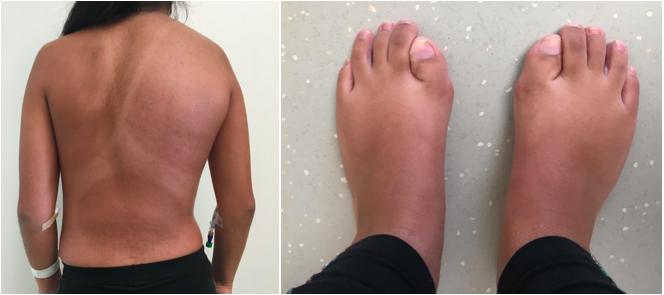
Treatment is unique for each person to address their specific symptoms.
Genetic disorders like fibrodysplasia ossificans progressiva do not have an effective cure till now, and since the removal of the bone will only lead to the growth of new and more painful heterotopic bone, medical professionals have come up with a couple of medications that slow down the growth and intensity of ossification:
- High dosage of corticosteroids like Prednisone to reduce pain and swelling flare-up. seen in the early stages. It is recommended to be within 24hrs of the first flare-up, before Nonsteroidal anti-inflammatory drugs (NSAIDs) which need to be given between flare-ups.
- Muscle relaxants,
- Mast cell inhibitors,
- Aminobisphosphonates,
- Using mobility equipment like a wheelchair,
- Wearing a brace,
- Assistive devices such as braces or special shoes to help with walking,
- Occupational therapy.
One of the things that needed to be monitored in the treatment duration is things that can increase the ossification and physical discomfort.
Precautions
Treatments and medical diagnoses associated with bone such as biopsy, Intramuscular injections (immunizations) or injections, and jaw stretching during dental procedures must be avoided, as it can damage the skeletal system which can flare up the process of ossification in the affected area.
Avoid getting hurt, it’s not easy when your mobility is manipulated but blunt trauma or injury can cause a flare-up in the heterotopic bone, any physical activity that has a risk of fall and other physical injuries must be restricted.
FOP can be dangerous for pregnant women, it is advised to avoid childbirth if you have this genetic disorder for majorly two reasons, firstly your malfunction genetics can be transferred into your offspring making their survival difficult for the rest of their lives. Secondly, The increasing fetus in your womb can increase the risk of flare-ups which can be life-threatening for both mother and baby.
Prevention
Preventing symptoms of fibrodysplasia ossificans progressiva involves avoiding trauma to your muscles and tissues. Symptoms flare up when you experience an event that causes stress to your body, like surgery, an injury or an illness. You can reduce your risk of having flare-ups of fibrodysplasia ossificans progressiva symptoms by:
- Avoiding situations where you might get an injury, fall or experience physical trauma like a broken bone.
- Getting subcutaneous injections (needle enters the fatty tissue of skin) for vaccines instead of intramuscular injections (needle enters the muscle).
- Receiving alternative diagnostic tests rather than a biopsy procedure or procedures where tissue needs removing.
- Receiving dental procedures that don’t stretch the jaw or use localized anesthetic injections.
- Taking preventative steps to avoid viral illnesses like the flu.
🧴 Homeopathic treatment for fibrodysplasia ossificans progressiva
How is fibrodysplasia ossificans progressiva treated?
Genetics has traditionally been viewed by allopathic pharma through the window of relatively rare single gene diseases, according to allopathic pharma industry, disorders such as hypertension, asthma, diabetes, susceptibility to cardiovascular disease are also affected by genetic background, as often evident from a patient’s family history, but Homeopathy shows it absolutely wrong; all these diseases or abnormalities are completely and forever curable with Homeopathic medication in very short time period (40 – 80 days). 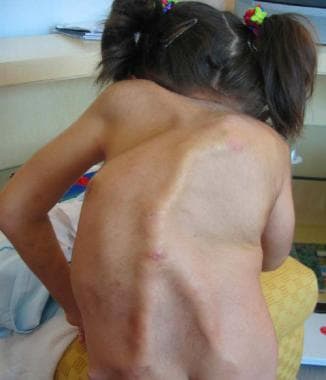
Fibrodysplasia Ossificans Progressiva (FOP), caused by ACVR1 gene mutation, is one of the rarest and most complex genetic disorders — and fortunately, modern Homeopathic medicine has its cure.
Important Cautions in FOP – Even minor trauma, injections, or surgery can trigger more bone formation — so all allopathic treatments must be avoided. Physiotherapy should be minimal and cautious. Avoid intramuscular injections and unnecessary invasive procedures.
Now, regarding homeopathy:
🩺 Homeopathy & FOP
Commonly Considered Homeopathic Remedies (Individualized)
Only selected after full case-taking, not for self-medication.
Mezerium
Teeth and face. Bruised, weary feeling in joints, with drawing and stiffness. Pains of various kinds, with chilliness and sensitiveness to cold air. Bone pains. Eruptions after vaccination (side effects). Burning, darting sensation in the muscles; subsultus tendinum (involuntary twitching of muscles). Pains shoot upward. Semi-lateral complaints. Patient is very sensitive to cold air. Leathery crusts, under which pus collects, Violent neuralgia about face and teeth, running towards ears. Swelling of glands with large abdomen.
Soreness and burning in bones of thorax. Constriction across chest. Pain in neck and back; intolerant of all touch. Burning pain in tibia and long bones, numbness. Pain in hip and knee.
Skin: Eczema; intolerable itching; chilliness with pruritus. Ulcers itch and burn, surrounded by vesicles and shining, fiery-red areola. Zona, with burning pain. Bones, especially long bones, inflamed and swollen, caries, exostosis. Eruptions ulcerate and form thick scabs under purulent matter exudes.
Calcarea Fluor
A powerful tissue remedy for hard, stony glands, varicose and enlarged veins, deformation and malnutrition of bones. Hard knots in muscles. Goiter. Induration threatening suppuration. Congenital syphilis manifesting itself in ulcerating of mouth and throat, caries and necrosis with boring pains and heat in parts. Arterio-sclerosis; threatened apoplexy. Tuberculosis. Creaking noise in head. Blood-tumors. Hard excrescences on the scalp. Ulcers on the scalp with callous, hard edges.
Subcutaneous palpebral cysts. Calcareous deposits on tympanum; sclerosis of ossicula and petrous portion of temporal bone, with deafness, ringing and roaring. Hard swelling on the cheek, with pain or toothache, hard swelling on jawbone.
Unnatural looseness of the teeth, with or without pain. Chief remedy for vascular tumors with dilated blood-vessels, and for varicose or enlarged veins. Chronic lumbago. Osseous tumors. Rachitic enlargement of femur. Pain lower part of back, with burning. Ganglia or encysted tumors at the back of the wrist. Gouty enlargements of the joints of the fingers. Exostoses on fingers. Chronic synovitis of knee joint.
Suppurations with callous, hard edges. Whitlow. Indolent, fistulous ulcers. Hard, elevated edges of ulcer, surrounding skin purple and swollen. Knots, kernels, hardened glands in breast and muscles. Swellings or indurated enlargements in the fasciae and capsular ligaments of joints, or in the tendons. Indurations of stony hardness. 
Calcarea Phos
Best for bone metabolism support. One of the most important tissue remedies, and while it has many symptoms in common with Calcarea carb, there are some differences and characteristic features of its own. It is especially indicated in tardy dentition and troubles incident to that period, bone disease non-union of fractured bones, and the anemias after acute diseases and chronic wasting diseases. Anemic patients who are peevish, flabby, have cold extremities and feeble digestion. It has a special affinity where bones form sutures or symphyses. Numbness and crawling are characteristic sensations, and tendency to perspiration and glandular enlargement are symptoms it shares with the carbonate. Scrofulosis, chlorosis and phthisis.
Calcarea Carbonicum
Its chief action is centered in the vegetative sphere, impaired nutrition being the keynote of its action, the glands, skin, and bones, being instrumental in the changes wrought. Increased local and general perspiration, swelling of glands, scrofulous and rachitic conditions generally offer numerous opportunities for the exhibition of Calcarea. Incipient phthisis. It covers the tickling cough, fleeting chest pains, nausea, acidity and dislike of fat. Gets out of breath easily. A jaded state, mental or physical, due to overwork. Abscesses in deep muscles; polyps and exostoses. Pituitary and thyroid disfunction.
Swelling of tonsils and submaxillary glands; stitches on swallowing. Hawking-up of mucus. Difficult swallowing. Goiter. Parotid fistula. Skin unhealthy; readily ulcerating; flaccid. Small wounds do not heal readily. Glands swollen. Back pain as if sprained; can scarcely rise; from over lifting. Pain between shoulder-blades, impeding breathing. Rheumatism in lumbar region; weakness in small of back. Curvature of dorsal vertebrae. Nape of neck stiff and rigid. Renal colic.
Rheumatoid pains, sharp sticking, as sprained. Weakness of extremities. Swelling of joints, especially knee. Burning of soles of feet. Sweat of hands. Arthritic nodosities. Soles of feet raw. Feet feel cold and dead at night. Old sprains. Tearing in muscles.
Baryta Carbonica
Scrofulous patients, especially if they are backward mentally and physically, are dwarfish, do not grow and develop, have scrofulous ophthalmia, swollen abdomen, take cold easily, and then always have swollen tonsils. Diseases of degenerative changes begin; cardiac vascular and cerebral, hypertrophied prostate or indurated testes, very weak and weary, must sit or lie down or lean on something. Affects glandular structures, and useful in general degenerative changes, especially in coats of arteries, aneurism, and senility. Baryta acts on the muscular coats of heart and vessels. Arterial fibrosis. Blood-vessels soften and degenerate, become distended, and aneurisms, ruptures, and apoplexies result.
Hardness of hearing. Crackling noise. Glands around ears painful and swollen. Reverberation on blowing nose. Mouth filled with inflamed vesicles, foul taste. Paralysis of tongue. Smarting, burning pain in tip of tongue. Dribbling of saliva at dawn. Spasm of esophagus when food enters. Abdomen: Hard and tense, distended. Colicky. Enlarged mesenteric glands. 
Submaxillary glands and tonsils swollen. Feeling of a plug-in pharynx. Swollen glands in nape of occiput. Fatty tumors about neck. Bruised pain between scapulae. Stiffness in sacrum. Weakness of spine. Pain in axillary glands. Numbness of limbs. Numb feeling from knees to scrotum. Toes and soles sore; soles painful when walking. Pain in joints; burning pains in lower limbs.
Angustura Vera
Medicine of tea fanatics and coffeeholics. Principal action on spinal motor nerves and mucous membranes. Rheumatic and paralytic complaints-great difficulty in walking. Crackling in all joints. Caries of long bones. Paralysis. Tetanus. Stiffness of muscles and joints. Oversensitive.
Acute pain in cheeks. Drawing in facial muscles. Pain in temporal muscles, when opening the jaws. Pain in articulation of jaw, in masseter muscles, as if fatigued by chewing too much. Cramp-pain on the zygomatic arch.
Itching along back. Pain in cervical vertebrae. Drawing in the neck. Pain in spine, at nape of neck and sacrum. Twitching and jerking along back. Bends backward. Stiffness and tension of muscles and joints. Pain in limbs on walking. Arms tired and heavy. Caries of long bones. Coldness of fingers. Pain in knees. Cracking in joints. Caries, very painful ulcers which affect the bone.
Aurum Metallicum
Caries of ossicula and of mastoid. Obstinate fetid otorrhea. External meatus bathed in pus. Chronic nerve deafness; Labyrinthine disease due to syphilis. Nose ulcerated, painful, swollen, obstructed. Inflammation of nose; caries; fetid discharge, purulent, bloody. Knobby tip of nose. Exostosis, caries, nightly bone-pains, especially cranial, nasal, and palatine. Glands swollen in scrofulous patients. Arterio-sclerosis, high blood pressure; nightly paroxysms of pain behind sternum. Tearing in zygoma. Mastoid and other facial bones inflamed. Throat stitches when swallowing; pain in glands. Caries of the palate.
Destruction of bones, like secondary syphilis. Pain in bones of head, lumps under scalp, exostosis with nightly pains in bones. Caries of nasal, palatine and mastoid bones. Soreness of affected bones, better in open air, worse at night. Paralytic, tearing pains in joints. Knees weak.
Argentum Metallicum
The chief action is centered on the articulations and their component elements, bones, cartilages, and ligament’s. Here the small blood vessels become closed up or withered and carious affections result. Severe backache; must walk bent, with oppression of chest. Rheumatic affections of joints, especially elbow and knee. Legs weak and trembling, worse descending stairs. Involuntary contractions of fingers, partial paralysis of forearm; writer’s cramp. Swelling of ankles.
Acid Flouricum
Especially adapted to chronic diseases with syphilitic and mercurial history. Glabella region bloated. Acts especially upon lower tissues, and indicated in deep, destructive processes, fibrodysplasia ossificans, bedsores, ulcerations, varicose veins, and ulcers. Patient is compelled to move about energetically. Prematurely aged. Goiter. Early decay of teeth. Old cases of nightly fevers, coming on periodically. 
Caries of skin. Pressure on sides of head from within outward. Caries of ossicles and mastoid, with copious discharge. Exostosis. Chronic nasal catarrh with ulceration of the septum; nose obstructed and dull heavy pain in forehead. Inflammation of joints of fingers. Feeling as of a splinter under nail. Nails crumble. Caries and necrosis, especially of long bones. Coccygodynia. Ulcer over tibia.
Varicose veins. Naevi. Ulcers; red edges and vesicles. Decubitus (the consequence of lying or sitting in one position too long). Syphilitic rupia. Itching of cicatrices. Nails grow rapidly. Periosteal abscess. Profuse, sour, offensive perspiration. Syphilitic tubercles. Atony of capillary and venous system. Tissues bloated.
Phosphorus
Irritated, inflamed and degenerated mucous membranes, serous membranes, inflammation of spinal cord and nerves, causing paralysis, destroyed bones, especially the lower jaw and tibia, disorganized blood, fatty degeneration of blood vessels and every tissue and organ of the body, hemorrhages, and hematogenous jaundice.
Destructive metabolism. Polycythemia. Blood extravasations: fatty degenerations, cirrhosis, caries etc. Muscular pseudo-hypertrophy, neuritis. Inflammation of the respiratory tract. Paralytic symptoms. Ill effects of iodine and excessive use of salt. Tertiary syphilis, skin lesions, and nervous debility. Scurvy. Pseudo-hypertrophic paralysis. Ataxia and adynamic. Osteo myelitis. Bone fragility.
Silicea Tera
Imperfect assimilation and consequent defective nutrition. It goes further and produces neurasthenic states in consequence, and increased susceptibility to nervous stimuli and exaggerated reflexes. Diseases of bones, caries and necrosis. Silica can stimulate the organism to re-absorb fibrotic conditions and scar-tissue. Hard, cold swelling of glands.
Merc Solubilis
The lymphatic system is especially affected with all the membranes and glands, and internal organs, bones etc. Weakness of limbs. Bone-pains and in limbs; worse, night. Patient very sensitive to cold. Oily perspiration. Trembling extremities, especially hands, paralysis agitans. Lacerating pain in joints. Cold, clammy sweat on legs at night. Dropsical swelling of feet and legs.
Vesicular and pustular eruptions. Ulcers, irregular in shape, edges undefined. Pimples around the main eruption. Itching, worse from warmth of bed. Crusta lactea; yellowish-brown crusts, considerable suppuration. Glands swell every time patient takes cold. Buboes. Orchitis. 
Syphilinium
Severe pain in long bones. Redness and rawness between toes (Sil). Rheumatism, muscles are caked in hard knot or lumps. Always washing the hands. Indolent ulcers. Muscles contracted in hard knots.
Symphytum officianale
Stimulates the growth of epithelium on ulcerated surfaces. Gastric and duodenal juries to sinews, tendons and the periosteum. Acts on joints generally. Neuralgia of knee. Of great use in wounds penetrating to perineum and bones, and in non-union of fractures; irritable stump after amputation, irritable bone at point of fracture. Psoas abscess. Pricking pain and soreness of periosteum. Inflammation of inferior maxillary bone, hard, red, swelling.
Phytolacca Decandra
Aching, soreness, restlessness, prostration. Pre-eminently a glandular remedy. Glandular swellings with heat and inflammation. Has a powerful effect on fibrous and osseous tissues; fasciae and muscle sheaths; acts on scar tissue. Syphilitic bone pains; chronic rheumatism. Sore throat, quinsy, and diphtheria. Tetanus and opisthotonos. Decrease of weight. Retarded dentition.
Cocculus Indicus
Cracking of cervical vertebrae when moving head. Paralytic pain in small of the back. Pain in shoulder and arms as if bruised. Pressure in scapula and nape. Stiffness on moving shoulders. Lameness; worse by bending. Trembling and pain in limbs. Arms go to sleep. One-sided paralysis; worse after sleep. Hands are alternately hot and cold; numbness and cold sweat now of one, now of the other hand. Numb and unsteady. Knees crack on motion. Lower limbs very weak. Inflammatory swelling of knee. Intensely painful, paralytic drawing. Limbs straightened out, painful when flexed.
Ruta graveolens
Acts upon the periosteum and cartilages. Spine and limbs feel bruised. Small of back and loins pain. Legs give out on rising from a chair, hips and thighs so weak. Contraction of fingers. Pain and stiffness in wrists and hands. Ganglia. Sciatica; pain from back down hips and thighs. Hamstrings feel shortened. Tendons sore. Aching pain in tendo-Achilles. Thighs pain when stretching the limbs. Pain in bones of feet and ankles. Great restlessness. Ligament & tendon ossification.
Conium Maculatum
Growth of tumors invite it also. General feeling as if bruised by blows. Great debility in the morning in bed. Weakness of body and mind, trembling, and palpitation. Cancerous diathesis. Arterio-sclerosis. Caries of sternum. Enlarged glands. Acts on the glandular system, engorging and indurating it, altering its structure like scrofulous and cancerous conditions. Insomnia of multiple neuritis. Coccydynia. 
Acid Benzoicum
Pressure on spinal column. Coldness in sacrum. Joints crack on motion. Tearing with stitches. Pain in tendo Achillis. Rheumatic gout; nodes very painful. Gouty deposits. Ganglion; swelling of the wrist. Pain and swelling in knees. Bunion of great toe, tearing pain. Bones swelling.
All these medicines would be prescribed constitutionally based on the patient’s full symptom picture, not just the diagnosis.
🧠 Bottom Line
-
Complete reversal is not possible.
-
Homeopathy will definitely help improve health and quality of life, minimize and treat discomfort, and potentially stop or slow the progressive nature.
-
Needs long-term, careful constitutional treatment along with preventive care.
P. S: This article is only for doctors and students having good knowledge about Homeopathy and allopathy.

For proper consultation and treatment, please visit our clinic.
 Dr. Sayyad Qaisar Ahmed (MD {Ukraine}, DHMS), Abdominal Surgeries, Oncological surgeries, Gastroenterologist, Specialist Homeopathic Medicines.
Senior research officer at Dnepropetrovsk state medical academy Ukraine.
Location: Al-Haytham clinic, Umer Farooq Chowk Risalpur Sadder (0923631023, 03119884588), K.P.K, Pakistan.
Find more about Dr Sayed Qaisar Ahmed at:
https://www.youtube.com/Dr Qaisar Ahmed