

Hypercalcemia is a condition in which you have too high a concentration of calcium in your blood. Calcium is essential for the normal function of organs, cells, muscles, and nerves. It’s also important in blood clotting and bone health.
However, too much of it can cause problems. Hypercalcemia makes it hard for the body to carry out its normal functions. Extremely high levels of calcium can be life-threatening.
Symptoms of hypercalcemia?
You might not have any noticeable symptoms if you have mild hypercalcemia. If you have a more serious case, you will typically have signs and symptoms that affect various parts of your body.
General
Kidneys
 Symptoms related to the kidneys include:
- excessive thirst,
- excessive urination,
- pain between your back and upper abdomen on one side due to kidney stones.
Abdomen
Symptoms related to the abdomen include:
- nausea,
- abdominal pain,
- decreased appetite,
- constipation,
- vomiting.
Heart
High calcium can affect the electrical system of the heart, causing abnormal heart rhythms.
Muscles
Skeletal system
High calcium levels can affect bones, leading to:
- bone pain,
- osteoporosis,
- fractures from disease.
Neurological symptoms
Hypercalcemia can also cause neurological symptoms, such as depression, memory loss, and irritability. Severe cases can cause confusion and coma.
If someone have cancer and experience any symptoms of hypercalcemia, it’s not uncommon for cancer to cause elevated calcium levels. When this occurs it’s a medical emergency.
What causes hypercalcemia?
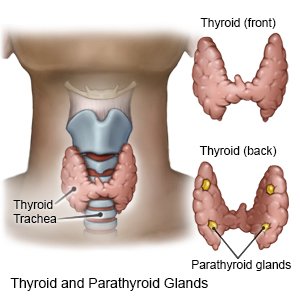 Our body uses the interaction between calcium, vitamin D, and parathyroid hormone (PTH) to regulate calcium levels.
PTH helps the body control how much calcium comes into the blood stream from the intestines, kidneys, and bones. Normally, PTH increases when the calcium level in our blood falls and decreases when our calcium level rises.
Our body can also make calcitonin from the thyroid gland when our calcium level gets too high. When someone have hypercalcemia, there is excess calcium in his blood stream, and his body can’t regulate his calcium level normally.
There are several possible causes of this condition:
Hyperparathyroidism
The parathyroid glands are four small glands located behind the thyroid gland in the neck. They control the production of the parathyroid hormone, which in turn regulates calcium in the blood.
Hyperparathyroidism occurs when one or more of our parathyroid glands becomes overly active and releases too much PTH. This creates a calcium imbalance that the body cannot correct on its own. This is the leading cause of hypercalcemia, especially in women over 50 years old.
Lung diseases and cancers
Granulomatous diseases, such as tuberculosis and sarcoidosis, are lung diseases that can cause our vitamin D levels to rise. This causes more calcium absorption, which increases the calcium level in our blood.
Some cancers, especially lung cancer, breast cancer, and blood cancers, can raise one’s risk for hypercalcemia.
Medication side effects
Many allopathic medications, particularly diuretics, can produce hypercalcemia. They do this by causing severe fluid diuresis, which is a loss of body water, and an underexcretion of calcium. This leads to an excess concentration of calcium in the blood. Other drugs, such as all antacids, all types of supplements, lithium (cause more PTH to be released) etc.
Dietary supplements and over-the-counter medications
Taking too much vitamin D or calcium in the form of supplements (allopathic) can raise your calcium level. Excessive use of calcium carbonate, found in common antacids like Tums and Rolaids, can also lead to high calcium levels.
High doses of these over-the-counter products are the third most common cause of hypercalcemia.
Dehydration
This usually leads to mild cases of hypercalcemia. Dehydration causes our calcium level to rise due to the low amount of fluid in our blood. However, the severity greatly depends on one’s kidney function. In people with chronic kidney disease, the effects of dehydration are greater.
Diagnosis
A doctor can use blood tests to check the calcium level in patient’s blood. Urine tests that measure calcium, protein, and other substances can also be helpful.
If a doctor finds a high calcium level, they’ll order more tests to find out the cause of patient’s current condition. Blood and urine tests can help a doctor diagnose hyperparathyroidism and other conditions.
Tests that can allow your doctor to check for evidence of cancer or other diseases that can cause hypercalcemia include:
- chest X-rays, which can reveal lung cancer,
- mammograms, which help diagnose breast cancer,
- CT scans, which form a more detailed image of patient’s body,
- MRI scans, which produce detailed images of patient’s body’s organs and other structures,
- DEXA bone mineral density tests, which evaluate bone strength.
What are the allopathic treatment options for hypercalcemia?
Allopathic treatment options for hypercalcemia depend on the severity of the condition and the underlying cause.
Mild cases
One may not need immediate treatment if he/she has a mild case of hypercalcemia, depending on the cause. However, he/she will need to monitor its progress. Finding the underlying cause is important.
The effect that elevated calcium levels have on patient’s body relate not just to the level of calcium present, but how quickly it rises. Therefore, it’s important to stick to the doctor’s recommendations for follow-up. Even mildly elevated levels of calcium can lead to kidney stones and kidney damage over  time.
time.
Moderate to severe cases
These patients will likely need hospital treatment if have a moderate to severe case. The goal of treatment is to return patient’s calcium level to normal. Treatment also aims to prevent damage to the bones and kidneys. Common treatment options include the following:
- Calcitonin (hormone produced in the thyroid gland) slows down bone loss.
- Intravenous fluids (electrolytes) hydrate patient and lower calcium levels in the blood.
- Corticosteroids are useful in the treatment of too much vitamin D.
- Loop diuretic medications can help patient’s kidneys move fluid and get rid of extra calcium, especially if patient have heart failure.
- Intravenous bisphosphonates lower blood calcium levels by regulating bone calcium.
- Dialysis can be performed to rid patient’s blood of extra calcium and waste when patient have damaged kidneys. This is usually done if other allopathic treatment methods aren’t working.
Primary hyperparathyroidism
Depending on patient’s age, kidney function, and bone effects, patient might need surgery to remove the abnormal parathyroid glands.
If surgery isn’t an option for patient, doctor may recommend a medication called cinacalcet, it lowers calcium level by decreasing PTH production. If patient have osteoporosis, doctor might advise patient take bisphosphonates to lower risk of fractures.
Cancer
If someone have cancer, he/she might be able to get relief from symptoms through intravenous fluids and medications like bisphosphonates. This might make it easier for patient to deal with cancer treatments.
The medication cinacalcet can also be used to treat high calcium levels due to parathyroid cancer. Research suggests it may also have a role in the treatment of hypercalcemia due to other cancers as well.
What are the complications associated with hypercalcemia?
Hypercalcemia can cause kidney problems (kidney stones and kidney failure), irregular heartbeats and osteoporosis, confusion or dementia since calcium helps keep our nervous system functioning properly. Serious cases can lead to a potentially life-threatening coma.
What are the Homeopathic treatment options for hypercalcemia?
Mild cases
According to Homeopathic theory, a person needs immediate treatment if he/she has a mild case of hypercalcemia, depending on the cause, to monitor its progress and finding the underlying cause is important.
 The effect that elevated calcium levels have on patient’s body relate not just to the level of calcium present, but how quickly it rises. Therefore, it’s important to stick to the Homeopathic doctor’s recommendations for follow-up. If you have kidney stones and kidney damage (over time), it is curable with Homeopathic treatment.
Moderate to severe cases
With Homeopathic treatment, these patients have no need for hospital treatment even if have a moderate to severe case. The goal of Homeopathic treatment is to return patient’s calcium level to normal, to prevent and cure the damage to the bones and kidneys. Common treatment options include the following:
- To treat and cure the calcitonin (hormone produced in the thyroid gland) and slow down bone loss.
- Advise Homeopathic electrolytes (Calcarea Carb, Calcarea Flour, Calcarea Phos, Natrium Muriate, Lithium, Zinc Metallicum, Aurum Metallicum, Silicea Tera etc.) hydrate patient and lower calcium levels in the blood.
- Homeopathic diuretic medications (Baryta Carb, Baryta Muriat, Crataegus Oxy etc.) can help patient’s kidneys move fluid and get rid of extra calcium, especially if patient have heart failure.
Primary hyperparathyroidism
Patient of any age, kidney function, and bone effects, have no need any surgery or remove the abnormal parathyroid glands, it’s an easy task for any Homeopath to treat and cure, therefor no need to operate or remove your organs.
Cancer
If someone have cancer, he/she might be able to get health (cure) from symptoms through Homeopathic treatment, this is an easier way for patient to deal with cancer treatments.
What is the long-term outlook?
Patient’s long-term outlook will depend on the cause and how severe the condition is. A good doctor can determine the best treatment choice for his patients.
Patient can do his/her part to help protect the kidneys and bones from damage due to hypercalcemia by making healthy lifestyle choices, drink plenty of water. This will keep you hydrated, keep blood levels of calcium down, and decrease your risk of developing kidney stones.
Since smoking can speed up bone loss, it’s important to quit as soon as possible. Smoking also causes many other health issues. Quitting smoking can only help your health.
A combination of physical exercises and strength training can keep your bones strong and healthy. This is especially important if one have cancer that affects the bones.
Make sure to quit/stop all allopathic over-the-counter supplements and medications to decrease the risk of excessive vitamin D and calcium intake.
P. S: This article is only for doctors and students having good knowledge about Homeopathy and allopathy.

For proper consultation and treatment, please visit our clinic.
 Dr. Sayyad Qaisar Ahmed (MD {Ukraine}, DHMS), Abdominal Surgeries, Oncological surgeries, Gastroenterologist, Specialist Homeopathic Medicines.
Senior research officer at Dnepropetrovsk state medical academy Ukraine.
Location: Al-Haytham clinic, Umer Farooq Chowk Risalpur Sadder (0923631023, 03119884588), K.P.K, Pakistan.
Find more about Dr Sayed Qaisar Ahmed at:
https://www.youtube.com/Dr Qaisar Ahmed