

Sinusitis is an inflammation, or swelling, of the tissue lining the sinuses. Sinuses make mucus, which keeps the inside of our nose moist. That in turn, helps protect against dust, allergens, and pollutants.
Healthy sinuses are filled with air. But when they become blocked and filled with fluid, germs can grow and cause an infection.
- The common cold,
- Allergic rhinitis (swelling of the lining of the nose caused by allergens),
- Nasal polyps,
- A deviated septum, which is when the nasal cavity is crooked.
What are sinuses?
Your sinuses are empty spaces in our skull. Humans have four pairs of sinuses for a total of eight. The pairs are found:
- Above our eyes,
- Between our eyes,
- Behind our nose,
- Under our eyes, behind our cheeks.
Types of Sinusitis
There are several different types of sinusitis, depends on what caused sinusitis for example:
Acute sinusitis
Acute sinusitis is typically caused by the common cold, a viral infection. Patient should feel better within 10 days, though symptoms could stick around as long as 4 weeks. Patient will experience the following symptoms: 
- Stuffy nose/nasal congestion, that makes it tough to breathe through nose.
- Thick green or yellow mucus draining from nose — a runny nose — or down the back of throat (postnasal drip).
- Pain, pressure, swelling, and tenderness around the nasal passages that feels worse when patient bend over.
- Patient may get a headache, have pressure in ears, a cough, and other unpleasant symptoms.
Chronic sinusitis
Chronic sinusitis brings on the same unpleasant symptoms as acute sinusitis. But it lasts a whole lot longer – at least 3 months.
What causes it?
There are many diseases and causes that increase the risk, for example:
- Nasal polyps,
- Deviated nasal septum, in which the bone and cartilage that divides our nose gets pushed to one side, often due to an injury,
- Allergies,
- Recurring respiratory infections,
- Diseases that affect the immune system, such as cystic fibrosis, HIV, etc.
Subacute sinusitis
This type of sinusitis falls between acute and chronic. If patient’s sinusitis lasts more than 4 weeks but less than 12 weeks, he/she will be diagnosed with subacute sinusitis. This patient’s symptoms may not be as severe as acute sinusitis.
Recurrent sinusitis
It’s not uncommon to get the occasional bout of acute sinusitis. After all, it goes hand in hand with the common cold. But for some people, it keeps going away and coming back again. If a person gets acute sinusitis four or more times each year, he/she has “recurrent sinusitis”.
Some of the same risk factors for chronic sinusitis also up one’s chances of recurrent sinusitis, such as nasal polyps, deviated nasal septum, and other abnormalities that can occur in or around the sinuses. If a person regularly inhales tobacco smoke or other irritants in the air, he/she may have a higher risk of recurrent sinusitis. Sinusitis also raises chances of developing a bacterial infection, which in turn makes recurrent sinusitis more likely.
Fungal sinusitis
Fungi are living organisms that include mold, mildew and mushrooms. Tiny fungi can be breathed in. Sometimes, that causes a fungal infection in sinuses. There are two main categories: 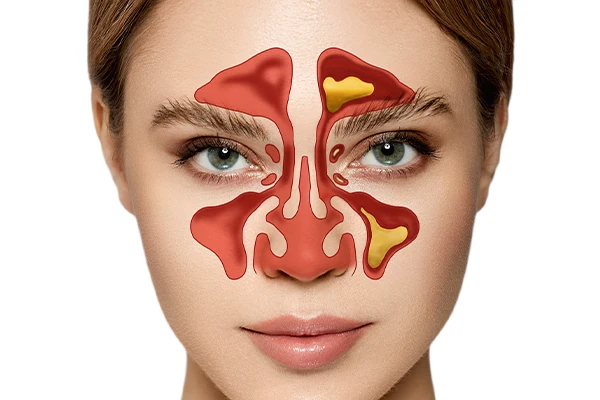
- Invasive fungal sinusitis. These rare infections can spread to the eyes, brain, and elsewhere. They can be deadly.
- Non-invasive fungal sinusitis. These infections are more common. They affect only our nose and sinus area.
The most common type of fungal sinusitis is called allergic fungal rhinosinusitis. It’s caused by an allergic reaction to fungi that have taken up residence in our nose. The symptoms are similar to other forms of sinusitis. But if someone have a weakened immune system, the symptoms can be different and severe:
Allergic sinusitis
Dust, pollen, smoke, and other environmental irritants that we breathe in can trigger sinusitis. The symptoms are mostly similar to symptoms of other types of sinusitis. But allergic sinusitis can cause a unique symptom: itchy nose, eyes, and throat. Symptoms can come and go with the seasons (Hay fever) as the number of allergens in the air change throughout the year.
Pansinusitis
Normally, a sinus infection doesn’t affect all four pairs of sinuses in our head; it only affects one or two. But sometimes, all four can become infected at once. This is known as pansinusitis.
Bacterial sinusitis vs. viral sinusitis
Both types of sinusitis are infections that cause similar symptoms. According to allopathic doctors, they are not the same and are treated differently, while Homeopathic doctor treats them the same ways/same medicines with success.
As mentioned above, most sinusitis is caused by the common cold, a virus. And there’s no allopathic cure for viral infections. Instead, patient have to visit a Homeopath and treat it to avoid complications. The symptoms typically begin to fade after 5 days to a week.
A bacterial sinus infection, on the other hand, sticks around longer (if not treated Homeopathically) — often a week to 10 days. One can treat the symptoms the same way you treat those of viral sinusitis.
Unfortunately, with allopathic treatment or without treatment bacterial infection may get worse, not better, after 7 days. Most allopathic doctor advises antibiotics to treat the infection but remember allopathic antibiotics do not work for viral infections.
These two types of sinusitis do often travel together. One may start with a viral infection and pick up a bacterial infection a week or so later. Why? because that initial infection makes it harder for our mucus to filter out threats to our health, including bacteria. 
Sinusitis vs. sinus infection
These terms are commonly used interchangeably, but they refer to different things that often go hand in hand. Sinusitis, sometimes called rhinosinusitis, refers to inflammation or swelling the develops in sinuses. A sinus infection, which 9 times out of 10 is caused by a virus, is usually the cause of that swelling. But one can have sinusitis without an infection. For example, allergies can cause inflammation and swelling in sinuses.
Sinusitis Symptoms
Your patient may have these symptoms for 12 weeks or more:
- A feeling of congestion or fullness in face,
- A nasal obstruction or nasal blockage,
- Pus in the nasal cavity,
- A fever,
- A runny nose or discolored/transparent postnasal drainage.
Patient may also have headaches, bad breath, and tooth pain and may feel tired a lot.
Sinusitis headache
When sinusitis causes a headache, patient will feel a nonstop dull pain around the area of the affected sinuses. That is behind the eyes, in cheekbones, in forehead, or around the bridge of nose. The pain from the headache gets worse if patient move his/her head suddenly or if bend over. Sudden temperature changes also can increase the pain. Pain worse in the morning. This headache is likely to stick around until patient’s sinus infection clears.
How long does sinusitis last?
In order to receive a diagnosis of chronic sinusitis, your patient’s symptoms must last at least 12 weeks, or 3 months, patient may experience symptoms for much longer. Some research has found that symptoms can linger for more than a decade. They may improve over time, but they don’t always go away completely if not treated.
Is sinusitis contagious?
Sinusitis is not contagious. But the cause of sinusitis likely is. Most sinusitis is caused by the common cold, a viral infection. That virus can be spread through respiratory droplets, meaning what flies out of nose and mouth when a person sneeze and cough and when talk. Also, some bacterial infections that trigger sinusitis — such as Streptococcus pneumoniae, which causes some forms of pneumonia, meningitis, and sepsis — can spread during close contact or by touching a contaminated object.
Allopathic treatment for sinusitis
According to allopathic theory, medicines can help but many cases of sinusitis go away on their own without any medical treatment. If someone often get the condition, many of these same approaches will help prevent it, too.
Allopathic treatment will depend on a number of factors, such as what caused sinusitis and how long it has lasted. For example, sinusitis caused by a bacterial infection may require antibiotics, though it’s not likely. If it’s a result of the common cold, over-the-counter medications and time may be all one need. But if it has gone on for longer than 3 months, meaning it’s chronic, treatment should be more complex.
Allopathic medication
- Antibiotics. If you think a bacterial infection is the cause, prescribe antibiotics. For acute sinusitis, for 10-14 days. For chronic sinusitis, it should be longer. Antibiotics only help with bacterial infections. They won’t help if sinusitis is caused by viruses or other problems.
- Painkillers. Advise over-the-counter (OTC) pain medicines only for ten days, like ibuprofen or acetaminophen, to ease discomfort. Follow the instructions on the label.
- Bioelectronic sinus device. This works by using microcurrents to stimulate nerve fibers in patient’s sinuses, it sometimes helps reduce sinus inflammation, pain, and congestion.
- Decongestants. These meds lower the amount of mucus in the sinuses. Some are available as nasal sprays. Others are pills. If use decongestant nasal sprays for more than 3 days, they may make patient’s nose more congested.
- Allergy medicines. Many cases of sinusitis are due to uncontrolled allergies. If your patient never been diagnosed with allergies, it might be worth doing some allergy testing to see if patient have them. If yes, avoiding allopathic medications for example antihistamines (triggers) will help. Another option is to get allergy shots/vaccines (a long-term treatment).
- Steroids. In all cases, a doctor should prescribe inhaled steroids to bring down the swelling in the sinus membranes. For tough cases of chronic sinusitis, advise oral or intramuscular (IM) steroids.
Sinusitis surgery
If over-the-counter and prescription medications don’t ease patient’s chronic sinusitis symptoms, your patient might need sinus surgery. There are a few different procedures, and each aims to fix whatever is preventing mucus from draining normally, whether that’s correcting a structural abnormality such as a deviated septum and removing benign growths/polyps, or fungal infections.
The different sinus surgeries include:
Endoscopic sinus surgery. In this procedure, doctor will insert a camera and light into the nose. The endoscope allows you to see precisely where to operate and remove the problem — shaving off tissue or bone, plucking out the fungal infection, or removing polyps.
Septoplasty. Surgeons perform this procedure to correct a deviated septum. This involves reshaping — and possibly removing — some of the bone or cartilage inside the nose. This can be done during endoscopic sinus surgery.
Balloon sinuplasty. Doctor inserts a catheter into patient’s nose and threads it to the blockage in sinuses. Once there, the surgeon inflates a tiny balloon at the end of the catheter, then deflates and re-inflates it. This opens the sinuses, allowing them to drain and improving airflow.
Other Options
Ask your patient to avoid any triggers linked to sinusitis. If patient have allergies, recommend an antihistamine. In case of fungal infection, write a prescription for an antifungal medicine. If patient have certain immune deficiencies, give immunoglobulin, which helps fight the things body reacts to.
Homeopathic treatment for sinusitis
Homeopathy has the history of seven thousand years, it has dozens of medicines/remedies for all types of sinusitis, few of them are: 
Mercurius Corrosivus
Face swollen. Red, puffy. Lips black, swollen. Sordes. Facial neuralgia within the bones. Excessive coryza. Ozaena, with perforation of septum nasi. Rawness and smarting in nostrils. Post-nasal swelling, mucous membrane dry, red, and covered with bloody mucus. Violent pulsations in ears. Fetid pus (otorrhea). Frontal headache, congestion of head with burning in cheeks. Drawing pain in periosteum of skull.
Mentholum
Mucous membrane of Naso-pharynx and spinal nerve plexus, producing neurotic pains and parathesis. Menthol has proved curative in acute nasal catarrh; in acute eustachian catarrh; pharyngitis; laryngitis; neuralgias, itching, especially pruritus valve. Short, dry cough. Asthmatic breathing, with congestive headache.
Frontal headache, pain over frontal sinus, descends to eyeballs. Mental confusion. Supra orbital pain. Pain in face above zygoma with numbness. Pain in eyeballs. Coryza with post-nasal dripping. Cold sensation in nose. Eustachian tubes feel blocked and some deafness. Muscular pain in cervical region, Soreness of lumbar muscles.
Myristica Sebifera
A remedy of great antiseptic and anti-bacterial powers acts more powerfully often than Heper Sulph or Silica Tera. Inflammation of skin, cellular tissue and periosteum. Traumatic infections. Parotitis. Upper and lower respiratory tract infections. Coppery taste and burning in throat. Phlegmonous inflammations. Inflammation of middle ear, suppurative stage.
Heper Sulphuricum
Vesicular erysipelas, with pricking in parts. Neuralgia, extending in streak into temple, ear, alae, and lip. Pains in bones of face, even when being touched. Whizzing and throbbing in the ears, with hardness of hearing. Deafness after fever. Pustules in auditory canal and auricle. Mastoiditis. Boring pain in the temple and in root of nose every morning.
Nose sore, ulcerated. Soreness of nostrils, with catarrhal troubles. Sneezes in cold, dry wind, with running from nose, later, thick, offensive discharge. Stopped up every time in cold air. Hay-fever.
Kalium Bichromicum
Facial bones sensitive, especially beneath orbits. Mouth dry; viscid saliva. Tongue mapped, red, shining, smooth, thickly coated. Nose snuffles. Pressure and pain at root of nose and sticking pain in nose. Septum ulcerated, round ulcer. Fetid smell. Discharge thick, ropy, greenish yellow. Tough, elastic plugs from nose; leave a raw surface. Inflammation extends to frontal sinuses, with distress and fullness at root of nose. Dropping from posterior nares. Loss of smell.
Hawking. Inability to breathe through nose. Dryness. Coryza, with obstruction of nose. Violent sneezing. Profuse, watery nasal discharge. Chronic inflammation of frontal sinus with stopped-up sensation. Headache over eyebrows, preceded by blurred vision. Aching and fullness in glabella. Semi lateral headache in small spots, from suppressed catarrh. Frontal pain; usually over one eye. Bones and scalp feel sore. 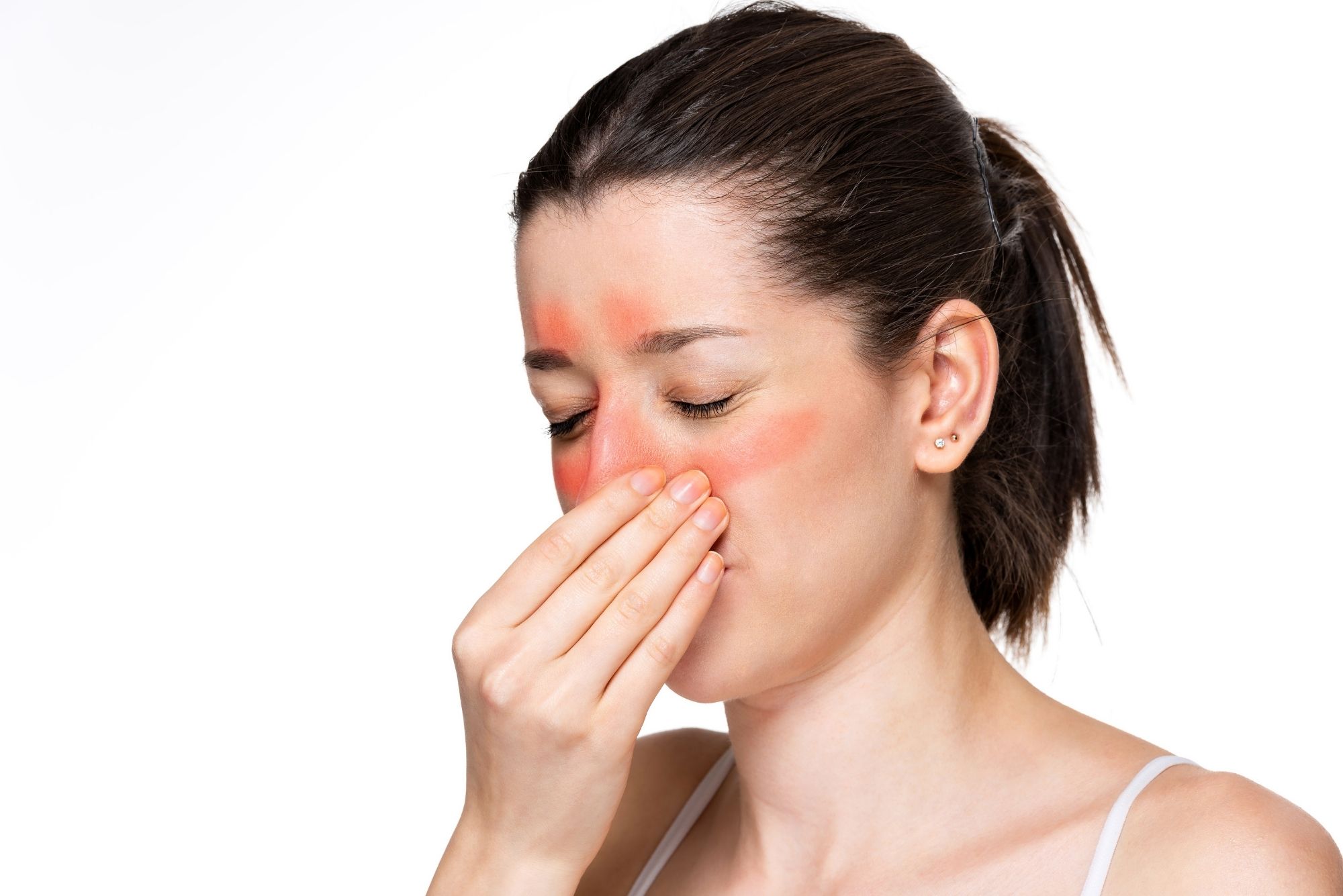
Hydrastis Canadensis
Tinnitus, ears roaring. Muco-purulent discharge. Deafness. Eustachian catarrh, with high-pitched voice. Thick, tenacious secretion from posterior nares to throat. Watery, excoriating discharge. Ozaena, with ulceration of septum. Tends to blow nose all the time. Dull, pressing frontal pain. Myalgia in scalp and muscles of neck. Sinusitis, after coryza.
Thuja Occidentalis
Chronic catarrh; thick, green mucus; blood and pus. On blowing nose, pain in teeth. Ulceration within the nostrils. Dryness of nasal cavities. Painful pressure at root. Chronic otitis; discharge purulent. Creaking when swallowing. Polyps. Severe headache.
Silicea Tera
Itching at point of nose. Dry, hard crusts form, bleeding when loosened. Nasal bones sensitive. Sneezing in morning. Obstructed and loss of smell. Perforation of septum. Fetid discharge from ears(otorrhea). Caries of mastoid. Loud pistol-like report. Sensitive to noise. Roaring in ears. Facial neuralgia, throbbing, tearing, face red; worse, cold damp. Sensitive to cold water. Pain begins at occiput, and spreads over head and settles over eyes. Swelling in the glabella.
Kalium Iodatum
Nose red, swollen. Tip of nose red; profuse, acrid, hot, watery, thin discharge. Ozaena, with perforated septum. Sneezing. Nasal catarrh, involving frontal sinus. Stuffiness and dryness of nose, without discharge. Profuse, cool, greenish, un-irritating discharges. Violent headache. Noises in ear. Boring pain in ears.
Conjunctiva red, injected, profuse lachrymation. Syphilitic iritis. Pustular keratitis and chemosis. Pain intense over eyes and root of nose. Facial neuralgia. Lancinating pain in upper jaw.
Ammonium Carbonicum
Hardness of hearing. Shocks through ears, eyes, and nose, when gnashing teeth. Pulsating forehead. Discharge of sharp, burning water. Stoppage at night, with long continued coryza. Cannot breathe through nose. Snuffles of children. Epistaxis after washing and after eating. Ozaena, blows bloody mucus from nose. Tip of nose congested.
Lycopodium Clavatum
Pressing headache on vertex. Headaches over eyes in severe colds. Sense of smell very acute. Feeling of dryness posteriorly. Scanty excoriating, discharge anteriorly. Ulcerated nostrils. Crusts and elastic plugs Fluent coryza. Nose stopped up. Snuffles, rubbing nose. 

Teucrium Marum Varum
A remedy of first importance in chronic nasal catarrh with atrophy; large, offensive crusts and clinkers. Ozaena. Loss of sense of smell. Catarrhal condition of both anterior and posterior nostrils. Mucous polypus. Chronic catarrh; discharge of large, irregular clinkers. Foul breath. Crawling in nostrils, with lachrymation and sneezing. Coryza, with stoppage of nostrils. Excited, tremulous feeling. Frontal pain; worse, stooping.
Nux Vomica
Nose stuffed up, at night especially. Stuffy colds, snuffles, after exposure to dry, cold atmosphere; worse, in warm room. Odors tend to produce fainting. Coryza: fluent in daytime; stuffed up at night and outdoors; or alternates between nostrils. Bleeding in morning. Acrid discharge, but with stuffed up feeling. Smarting dry sensation in inner canthi. Infra-orbital neuralgia, with lachrymation. Optic nerve atrophy, from habitual use of allopathic drugs. Paresis of ocular muscles. Headache in occiput or over eyes, with vertigo. Over sensitiveness.
Pulsatilla Pratensis
Coryza; stoppage of nostril(s), pressing pain at root of nose. Loss of smell. Large green fetid scales in nose. Stoppage in evening. Yellow mucus; abundant in morning. Bad smells, as of old catarrh. Nasal bones sore. Right-sided facial neuralgia, with profuse lachrymation. Frontal and supra-orbital pains. Neuralgic pains, commencing in temporal region, with scalding lachrymation
Arsenicum Album
Thin, watery, excoriating discharge. Nose feels stopped up. Sneezing without relief. Hay-fever and coryza; worse in open air; better indoors. Burning and bleeding. Acne of nose. Lupus. Face swollen, pale, yellow, cachectic, sunken, cold, and covered with sweat. Periodical burning headache, with restlessness. Thin, excoriating, offensive otorrhea.
Graphites
Nose sore on blowing it; is painful internally. Smell abnormally acute; cannot tolerate flowers. Scabs and fissures in nostrils. Ophthalmia, with intolerance of artificial light. Headache in morning on waking, mostly on one side, with inclination to vomit. 
Sticta pulmonaria
Fulness at root of nose. Constant need to blow nose, but no result on account of dryness. Excessive and painful dryness of mucous membrane; secretions dry rapidly, forming scabs difficult to dislodge. Incessant sneezing with fulness in forehead and nose, tingling in nose. Coryza. Tertiary syphilis. Slight epistaxis. Yellow, thick discharge.
Darting pains in face; and in lower jaw. Pain in malar bone. Sensitiveness of lower jaw. Pain in submaxillary gland. Pain in parotid gland.
Nux Muscata
Sneezing; early in morning. Over-sensitiveness to smell; loss of smell. Catarrh. Nose-bleed, blood usually dark, black. Obstruction of nose.
Nux Vomica
Insupportable itching in nose. Sensitiveness and inflammatory redness of the internal nose. Obstruction of nose, sometimes discharge of mucus. Troublesome, dry catarrh of nose, which usually comes on very early in morning. Dry sneezing, chronic coryza; much mucus. Scraping (crawling) in nose and throat, heat in nostrils (with headache, heat in face, chilliness) and frequent sneezing during coryza. Acrid discharge from the obstructed nose. Sanguineous mucus in nose. Bleeding in nose, and discharge of clots of (dark) blood from nostrils. Fetid exhalation from nose.
Rumex Crispus
Great desire to pick nose. Nose obstructed, dry sensation, even in posterior nares. Sudden, sharp, tingling sensation in Schneiderian membrane, followed by violent and rapid sneezing five or six times in succession, with watery discharge. Violent sneezing with watery coryza and headache. Accumulation of mucus about posterior nares. Yellow mucus. Epistaxis, violent sneezing, and painful irritation of nostrils. Influenza with violent catarrh, followed by bronchitis.
Gelsemium
Sneezing followed by tingling and fulness in the nose. Early morning sneezing; streaming of water from nose. Sneezing with fluent coryza; profuse watery discharge excoriates the nostrils. Sensation of fulness at root of nose extending to neck and clavicles.
Natrium Muriaticum
Numbness and insensibility of one side of nose. Inflammation and swelling of nose, with pain when touched. Boring in bones of nose. Excoriation of interior of nose, with swelling of interior wings. Scabs and scurf in nose. Loss of smell and taste. Abortive sneezing. Obstruction and dryness of nose. Dry coryza, sometimes in morning only. Violent coryza, fluent or dry, with loss of smell and taste, and sneezing. Bleeding of nose when stooping. Blood clotted. Painful burning pustules below septum of nose, afterwards confluent and covered with a scab. 
Allium Cappa
Profuse watery discharge from the nose, with sneezing, acrid burning, excoriating the nose and upper lip. Fluent coryza, with running eyes, headache, heat, thirst, cough, trembling of the hands. Ichor oozing out of nose; second stage of scarlatina. Bleeding of the nose. A sort of hay-fever every August, morning coryza, violent sneezing, sensitive to the odor of flowers and skin of peaches. Nasal polypi.
Allium Sativa
Coryza rather dry than fluent, with pressive pain from above the root of the nose. Smarting at junction of alae nasi and face. Blowing blood from the nose in the night.
Borex
Itching in the nose, with tingling. Nostrils ulcerated, with swelling and pain, as of excoriation at the point of the nose. Dry scabs in the nose. Blood follows on blowing the nose. Red shining tip of nose; red noses. Nasal hemorrhage, with pulsative pains in the head. Sneezing, with violent shootings in chest. Accumulation of thick and greenish mucus in the nose.
P. S: This article is only for doctors and students having good knowledge about Homeopathy and allopathy.

For proper consultation and treatment, please visit our clinic.
 Dr. Sayyad Qaisar Ahmed (MD {Ukraine}, DHMS), Abdominal Surgeries, Oncological surgeries, Gastroenterologist, Specialist Homeopathic Medicines.
Senior research officer at Dnepropetrovsk state medical academy Ukraine.
Location: Al-Haytham clinic, Umer Farooq Chowk Risalpur Sadder (0923631023, 03119884588), K.P.K, Pakistan.
Find more about Dr Sayed Qaisar Ahmed at:
https://www.youtube.com/Dr Qaisar Ahmed