

An electrocardiogram test is an easy way to get information to diagnose a problem with the heart. It doesn’t take long and doesn’t cause pain, but an electrocardiogram test can tell us if patient had a heart attack, heart failure or heart damage. It can also tell us if patient’s heart rhythm isn’t normal or how well patient’s pacemaker is working.
What is an EKG?
An electrocardiogram (EKG/ECG) uses temporary electrodes on chest and limbs to monitor; track and document heart’s electrical activity (which controls our heartbeats) for diagnostic purposes. A computer translates the information into a wave pattern our doctor can interpret. This is a quick, noninvasive test. Patient can get an EKG or ECG while lying down and resting or while he/she is exercising as part of a stress test.
Types of EG/EKG devices
Because a typical electrocardiogram tracks our heart’s electrical activity for a very short time, it probably won’t pick up irregularities that only happen once in a while. To capture these erratic issues, a doctor can give his patient:
- Holter monitor: Patient wear this device for 24 to 48 hours to get a continuous recording of heart’s electrical activity for that time frame.
- Event monitor: Patient will wear this device for a week or more and may need to click a button to start recording when patient feel symptoms.
What is a Holter monitor?
A Holter monitor is a wearable device and a type of ambulatory electrocardiogram. It’s a type of heart monitor. It records heart’s rhythm and rate while patient wear it for 24 to 48 hours without breaks. This gives us a long look at patient’s heart’s electrical activity as he goes about his/her day. A Holter monitor doesn’t give real-time information to us.
This monitor is small (about the size of a deck of playing cards), lightweight and runs on battery power. It has wires and electrodes (small patches) that stick to patient’s skin. Patient wear a Holter monitor under his/her clothes while he/she continues with regular daily activities.
How to read an electrocardiogram
An internal pacemaker, patient’s sinoatrial node, starts heartbeat with an electrical signal. An EKG reads that signal and tracks its impact on patient’s heart as it contracts and relaxes with each heartbeat. 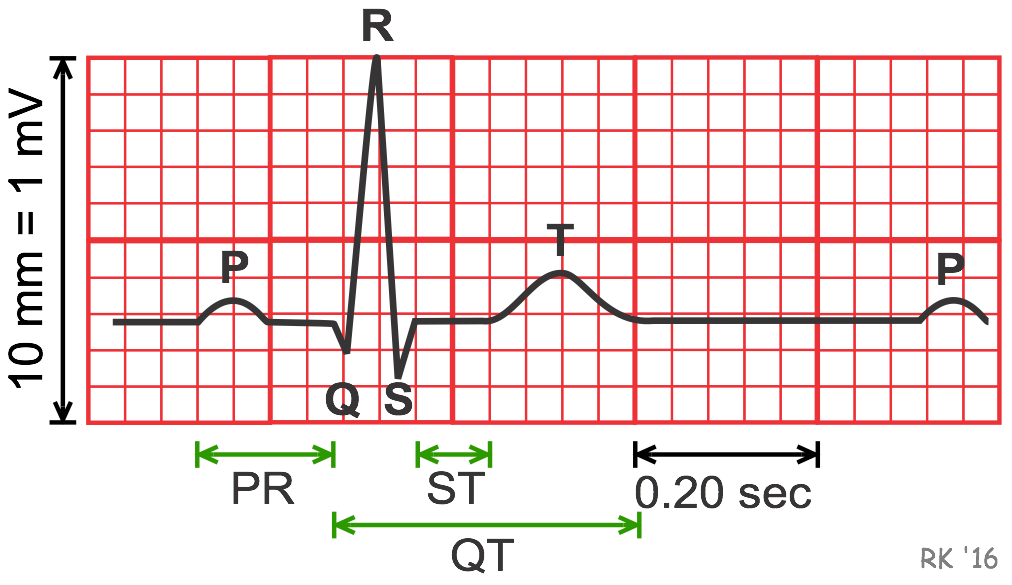
A doctor will look at how much electrical activity there is, how strong it is and how much time passes between the different waves or peaks that represent the electrical impulses.
- Patient’s upper heart chambers (atria), where heartbeats start, create the first wave, or “P wave.”
- Lower heart chambers (ventricles) create the next wave, called a QRS complex.
- The third wave, or “T wave,” shows patient’s heart at rest or recovering after beating.
What is an echocardiogram?
An echocardiogram (echo) is a graphic outline of heart’s movement. During an echo test, a doctor uses ultrasound (high-frequency sound waves) from a hand-held wand placed on patient’s chest to take pictures of his/her heart’s valves and chambers. This helps the doctor evaluate the pumping action of patient’s heart.
Doctors often combine echo with Doppler ultrasound and color Doppler techniques to evaluate blood flow across patient’s heart’s valves.
Echocardiography uses no radiation. This makes an echo different from other tests like X-rays and CT scans that use a huge amount of radiation.
What is an Ultrasound?
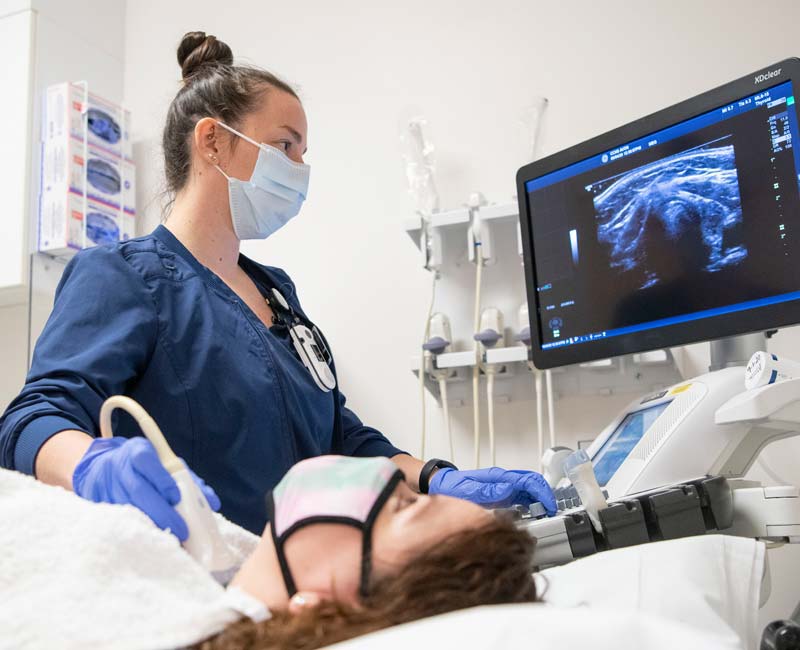
Ultrasound (also called sonography or ultrasonography) is a noninvasive imaging test that uses sound waves to create real-time pictures or video of soft tissues inside our body.
An ultrasound picture is called a sonogram. Ultrasound uses high-frequency sound waves to create real-time pictures or video of internal organs or other soft tissues, like blood vessels etc.
When would an EKG be used?
A doctor uses an EKG to:
- Assess patient’s heart rhythm to see if it’s normal or if patient have arrhythmia.
- Diagnose poor blood flow to the heart muscle (ischemia) because of coronary artery disease.
- Diagnose a heart attack.
- Diagnose abnormalities of heart, such as heart chamber enlargement and abnormal
electrical conduction. - Diagnose heart damage or heart failure.
- Make sure patient is fit for an upcoming surgery.
Doctors can also check on how patient’s heart is doing since he/she:
- Got a pacemaker.
- Started taking medication for heart disease.
- Had a heart attack.
Symptoms one can diagnose with an EKG
A doctor may give to patient an EKG test because he/she has:
- Chest pain.
- Shortness of breath.
- Tiredness.
- Dizziness.
- A flutter or skip in your heartbeat.
- A fast heartbeat.
Who performs an EKG?
A cardiologist usually orders or performs an EKG. However, other doctors can give this test to the patients, especially if patient in an ambulance or an emergency room instead of at a scheduled appointment. A patient can get an EKG in doctor’s office, at a hospital or at an outpatient facility/department (opd).
Test Details
How does an EKG work?
Electrodes or sensors a doctor puts on patient’s chest, legs and arms send information through wires to a computer that uses the data to make a wave chart. This shows the electrical activity that’s happening in patient’s heart. 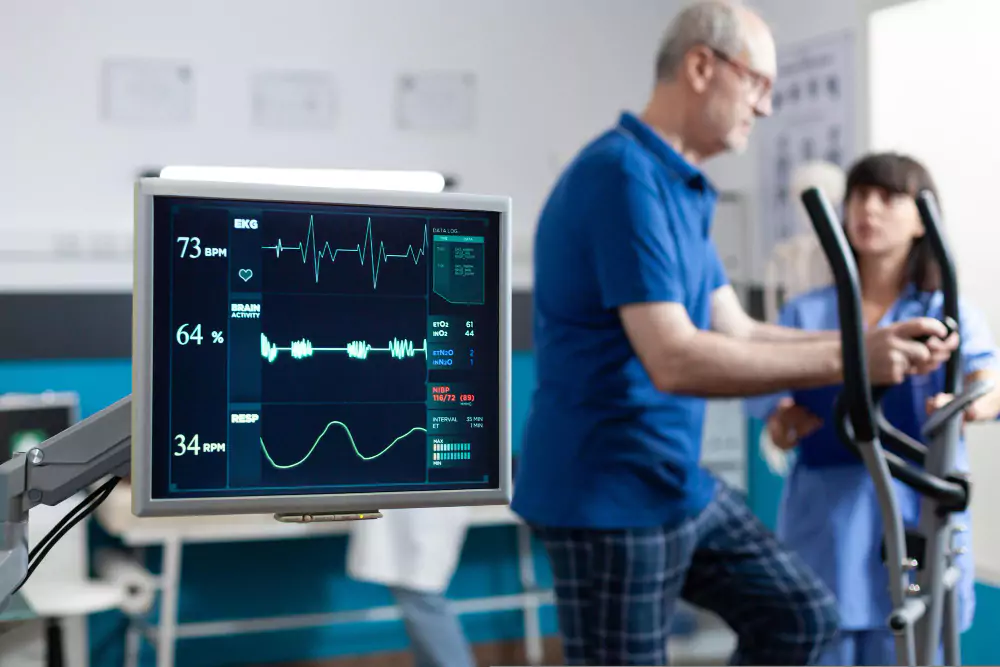
How to prepare for an EKG test?
Before an EKG, patient can eat and drink like normally he/she would. However, patient will want to keep the following in mind before getting dressed on the day of EKG test:
- Avoid oily or greasy skin creams and lotions the day of the test. They interfere with electrodes making good contact with patient’s skin.
- Avoid full-length hosiery, as electrodes need to be placed directly on the legs.
- Wear a shirt that patient can remove easily to place the leads on the chest.
What to expect on the date of the EKG test
A doctor will attach 12 electrodes with adhesive pads to the skin on patient’s chest, arms and legs. To allow a better connection, doctor may shave hair that’s in the way. It takes about 10 minutes to attach the electrodes and complete the test, but the actual recording takes only a few seconds.
What to expect during an electrocardiogram test
For a resting EKG, patient will lie flat and relax while the computer creates a picture, on graph paper, of the electrical impulses traveling through the heart. If doctor is doing a stress test, patient will be walking on a treadmill during the test.
The electrodes will stay on the skin until the EKG test is done. Patient won’t feel anything different when the electrodes are communicating with the computer.
What to expect after an electrocardiogram test
Doctor will remove all of the sticky electrode patches and patient can return to the normal activities.
What are the risks of an EKG test?
An EKG is a low-risk test. It doesn’t use radiation or put electricity into the skin. Patient might have some skin irritation after doctor removes the sticky patches that were attached to the sensors.
Results and Follow-Up
What type of results do we get and what do the results mean?
An EKG results may show that patient has: 
- A heart rhythm that’s irregular, too fast or too slow.
- A heart attack (past or present).
- Heart walls that are getting thicker (cardiomyopathy) or stretched out (aneurysm).
- A problem getting enough blood to the heart.
- Heart failure.
When should patient know the results of the test?
If a doctor is able to review the EKG test results right away, they may speak to the patient soon afterward. This is especially true in an emergency situation when patient may need immediate treatment. However, if electrocardiogram test is more routine or part of a group of tests before noncardiac surgery, patient may not hear from the doctor for a few days. The doctor will keep the EKG records on file to compare with future ones.
P. S: This article is only for doctors and students having good knowledge about Homeopathy and allopathy.

For proper consultation and treatment, please visit our clinic.
 Dr. Sayyad Qaisar Ahmed (MD {Ukraine}, DHMS), Abdominal Surgeries, Oncological surgeries, Gastroenterologist, Specialist Homeopathic Medicines.
Senior research officer at Dnepropetrovsk state medical academy Ukraine.
Location: Al-Haytham clinic, Umer Farooq Chowk Risalpur Sadder (0923631023, 03119884588), K.P.K, Pakistan.
Find more about Dr Sayed Qaisar Ahmed at:
https://www.youtube.com/Dr Qaisar Ahmed