

Up to two weeks before a menstrual period, hormone-driven changes in the body trigger a collection of premenstrual symptoms (PMS). These changes can cause cramps, breast pain, fatigue, mood swings, and upset stomach. Individual symptoms may vary since everyone’s menstrual cycle is unique.
Other body changes during the menstrual cycle are less obvious. The menstrual cycle is controlled by several hormones, including estrogen and progesterone, which are produced by follicles in the ovaries. Hormone shifts throughout the month may affect your mood and energy levels.
What Happens to Your Body on Your Period?
Your period is just one part of the menstrual cycle. The menstrual cycle consists of four distinct phases:
- Menstrual phase,
- Follicular phase,
- Ovulation,
- Luteal phase.
Here’s what changes happen in the body during each phase of the menstrual cycle:
Menstrual Phase
The first phase of the menstrual cycle is the menstrual phase, also known as our period. The menstrual phase starts on day one when you get your period, and ends when your period stops, usually around days five to seven.
Leading up to a period, increased levels of the hormone progesterone widen milk ducts in the breasts and prepare the uterus for pregnancy. When implantation doesn’t occur, progesterone levels quickly withdraw, triggering the endometrium (uterine lining) to shed and the period to begin.
According to the International Federation of Gynecology and Obstetrics, menstruation should last no longer than eight days.
While on your period, you may feel one or more of the following symptoms: 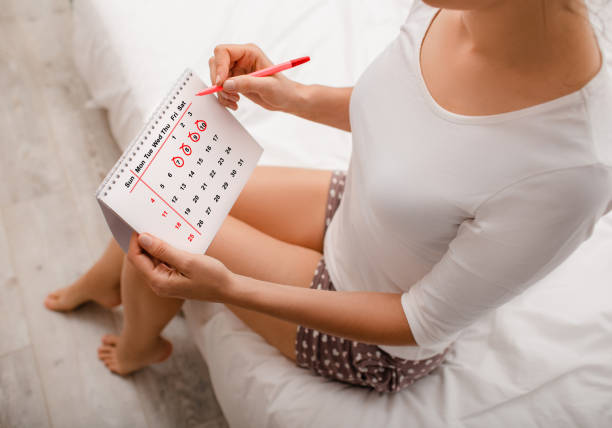
- Abdominal or pelvic cramps,
- Lower back pain,
- Bloating,
- Sore breasts,
- Food cravings,
- Mood swings and irritability,
- Headache,
- Fatigue.
Follicular Phase
The second phase of the menstrual cycle is the follicular phase. This phase overlaps with your menstrual phase, beginning on day one with your period and ending when you ovulate, around day 14.
An ovarian follicle is a small, fluid-filled sac in the ovary that contains an egg. The ovaries contain about 400,000 follicles by the time puberty begins.
During the start of the follicular phase, the anterior pituitary gland triggers rising levels of follicular stimulating hormone (FSH). FSH causes several ovarian follicles to undergo maturation. Between days 10 to 14 of the menstrual cycle, just one ovarian follicle will fully mature into an egg. It’s also during this phase that progesterone decreases and estrogen peaks, causing the endometrium to thicken in preparation for ovulation and possible pregnancy.
Decreased progesterone levels may have a positive effect on you. Research shows that lower progesterone levels are linked to greater strength, power, and energy in athletes during the follicular phase of their cycles.
The most fertile period of a normal menstrual cycle is the last three days of the follicular phase (also called “fertile window”) leading up to ovulation.
Ovulation
The third phase of the menstrual cycle is ovulation, occurring around day 14 of a 28-day cycle. During this time, luteinizing hormone (LH) levels suddenly surge, triggering ovulation within about 24 to 48 hours. Estrogen levels decrease during the LH surge while progesterone begins to rise again.
Ovulation occurs when the dominant ovarian follicle, containing a fully matured egg, bursts, releasing the egg into the fallopian tube where it can be fertilized by a sperm.
Sperm is viable for approximately three to five days, but the released egg is only viable for one—the day of ovulation. Therefore, conception is most likely to occur if you have intercourse in the three days leading up to ovulation.
Cervical mucus is a common symptom of ovulation. The discharge is typically clear, stretchy, and slippery like a raw egg white.
If you are trying to get pregnant, the best time to have intercourse is when you notice cervical mucus as it means you are ovulating.
Luteal Phase
The fourth stage, called the premenstrual or luteal phase, occurs around day 15 of the menstrual cycle. It lasts about 14 days and ends when you get your period. 
During the luteal phase, the follicle that released an egg in ovulation changes into a structure called the corpus luteum. This structure produces progesterone and estrogen. The rising hormone levels help thicken the endometrium.
If the egg is not fertilized with sperm, the corpus luteum dissolves, hormone levels decline, and the endometrium gets ready to shed. A period then marks the end of the luteal phase and the start of a new menstrual cycle.
Anxiety, stress, and binge eating may occur more frequently during the luteal phase.
Hormones and Your Menstrual Cycle
The menstrual cycle starts with your endocrine glands because they produce the hormones that determine when you get your period, the amount of menstrual flow, and what happens to your reproductive organs.
The area of the brain called the hypothalamus connects your nervous and endocrine system by way of the pituitary gland, which also is in the brain, and controls the hormones necessary for reproductive health and your period.
Seven hormones serve as chemical messengers to your reproductive system:
- Gonadotropin-releasing hormone (GnRH),
- Follicle-stimulating hormone (FSH),
- Luteinizing hormone (LH),
- Estrogen,
- Progesterone,
- Testosterone,
- Inhibin.
During your menstrual cycle, the hypothalamus first releases GnRH. This gives a signal to the pituitary gland and stimulates the production of FSH and LH.
Your ovaries produce estrogen, progesterone, and testosterone (yes, the “male” hormone) in reaction to stimulation by FSH and LH. When these hormones work harmoniously, normal menstrual cycles occur.
P. S: This article is only for doctors and students having good knowledge about Homeopathy and allopathy.

For proper consultation and treatment, please visit our clinic.
 Dr. Sayyad Qaisar Ahmed (MD {Ukraine}, DHMS), Abdominal Surgeries, Oncological surgeries, Gastroenterologist, Specialist Homeopathic Medicines.
Senior research officer at Dnepropetrovsk state medical academy Ukraine.
Location: Al-Haytham clinic, Umer Farooq Chowk Risalpur Sadder (0923631023, 03119884588), K.P.K, Pakistan.
Find more about Dr Sayed Qaisar Ahmed at:
https://www.youtube.com/Dr Qaisar Ahmed
https://www.facebook.com/ahmed drqaisar