

Calcification happens when calcium builds up in body tissue, blood vessels, or organs. This buildup can harden and disrupt our body’s natural processes. Calcium is transported through the bloodstream and is found in every cell, that’s why calcification can occur in almost any part of the body.
Other names for calcification are:
- Ossification,
- Crystallization,
- Solidification,
- Petrification,
- Fossilization,
- Freezing,
- Induration.
About 99% of our body’s calcium is in our bones including teeth. The other 1% is in the blood, muscles, fluid outside the cells, and other body tissues.
Some disorders cause calcium to deposit where it doesn’t typically belong. Over time, this can add up and cause problems.
Key Agents in Calcium Transport & Regulation:
- Vitamin D (Calcitriol): Essential for absorbing calcium from food in the gut into the bloodstream.
- Parathyroid Hormone (PTH): Released by parathyroid glands when blood calcium is low; it triggers bones to release calcium into the blood and helps kidneys reabsorb it.
- Albumin: A blood protein that binds to calcium, acting as the main carrier for “bound” calcium in the circulation.
- Calcitonin: A hormone that lowers blood calcium levels by inhibiting bone breakdown.
- Magnesium: Essential for the proper secretion and function of PTH.
Factors Affecting Transport:
- Blood pH: Acidosis increases free (ionized) calcium by reducing binding to albumin, while alkalinity increases binding, reducing free calcium.
- Kidney Function: Crucial for activating Vitamin D and regulating excretion.
Deficiency/Excess Management:
- Low Calcium (Hypocalcemia): Treated with calcium supplements and activated Vitamin D (calcitriol/alfacalcidol) to improve intestinal absorption.
- High Calcium (Hypercalcemia): Managed with IV fluids, bisphosphonates, or calcitonin to reduce calcium levels.
Key Vitamins and Minerals for Calcium Transport
- Vitamin D3 (Cholecalciferol): This is essential for creating the proteins that transport calcium into the bloodstream. It is obtained through sunlight, food (fatty fish, egg yolks), or supplements.
- Vitamin K2: Works alongside Vitamin D to ensure calcium is deposited into bones rather than accumulating in blood vessels, maintaining proper circulation.
- Magnesium: While a mineral, it works with Vitamin D to activate it, which in turn helps with calcium absorption.
Key Considerations
- Deficiency: Lack of Vitamin D results in low blood calcium (hypocalcemia).
- Recommendation: Adults typically need 400-1,000 IU of Vitamin D daily, though more may be required based on deficiency levels.
- Optimal Pairing: Taking Vitamin D3 and K2 together is highly effective for both absorbing calcium and ensuring it reaches the right place in the body.
Types of calcifications
Calcifications can form in many places throughout our body, including: 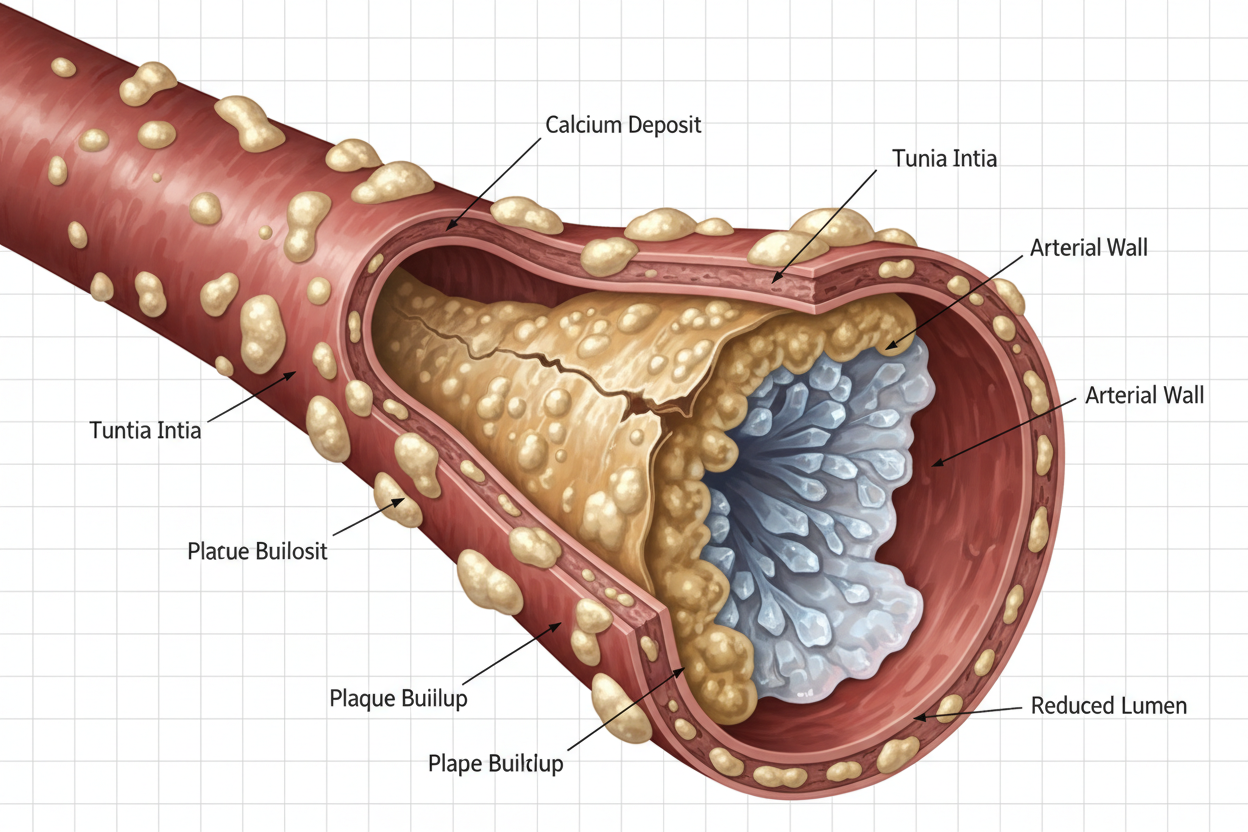
- small and large arteries,
- heart valves,
- brain, where it’s known as cranial calcification,
- joints and tendons, such as knee joints and rotator cuff tendons,
- soft tissues like breasts, muscles, and fat,
- kidney, bladder, and gallbladder.
Some calcium buildup is harmless. These deposits are believed to be the body’s response to inflammation, injury, or certain biological processes. But some calcifications can disrupt organ function and affect blood vessels.
Causes of calcification
Many factors play a role in calcification, including:
- infections,
- calcium metabolism disorders that cause hypercalcemia (too much calcium in the blood),
- genetic or autoimmune disorders affecting the skeletal system and connective tissues,
- persistent inflammation.
Diagnosing calcification
Calcifications are usually found via X-rays. A doctor may also order blood tests – serum creatinine, kidney function, and white blood cell counts, these tests can determine patient’s overall kidney function.
Sometimes calcium deposits are found in areas of cancer. Calcification is usually tested to rule out cancer as a cause. In such cases order a biopsy (often through a fine needle), if no cancer cells are detected, doctor will label the calcification as benign.
Breast calcifications
Breast calcifications occur when calcium builds up within the soft tissue of the breast. There are two main types of breast calcifications: macrocalcifications (large calcium buildups) and micro calcifications (small calcium buildups).
Macrocalcifications in the breasts are most common in women over 50 years old. Men can get breast calcifications, too, but it’s not as common.
Breast calcifications happen for several reasons. Breast injuries, cell secretions, infections, and inflammation can cause breast calcifications. You might also get calcifications if you’ve had breast cancer or radiation therapy for cancer. 
Most breast calcifications aren’t cancerous. This is especially true for macrocalcifications.
Micro calcifications are often not cancerous, but some micro calcification patterns may be signs of early breast cancer.
Breast calcifications are too small to be found during a regular breast exam. A doctor usually spots these deposits during a mammogram of patient’s breast tissue.